
गाइड
स्टैटिक बनाम डायनामिक UPI QR — फर्क और कब कौन-सा
स्टैटिक और डायनामिक UPI QR code में फर्क समझें — amount lock, note field, reconciliation और error rate की पूरी तुलना। दुकान और billing के लिए सही QR चुनें।
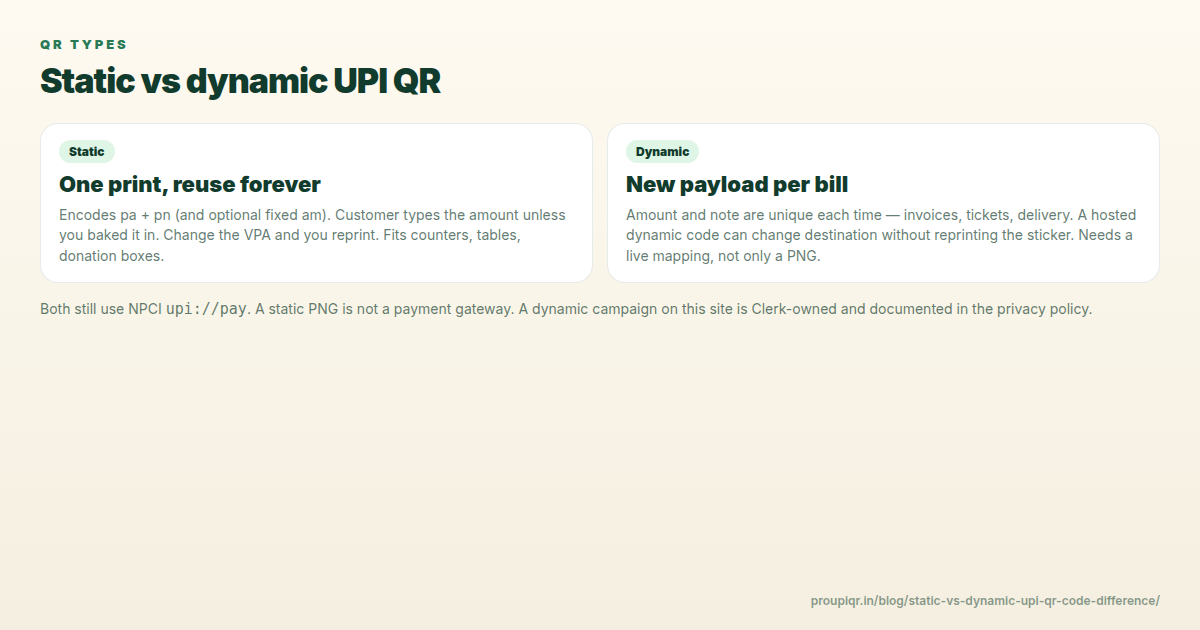
दुकानदार, freelancers और developers UPI payment setup करते समय “static QR” और “dynamic QR” शब्द सुनते हैं। दोनों एक ही NPCI upi://pay protocol use करते हैं, लेकिन checkout पर behavior में ज़मीन-आसमान का फर्क है, और दोनों के business use-case अलग हैं।
इस गाइड में plain language में फर्क, side-by-side comparison, और आपके workflow के लिए सही format चुनने का तरीका — तीनों समझेंगे।
Static UPI QR Code क्या है?
Static UPI QR permanent, reusable QR है जिसमें सिर्फ आपकी basic payment address encode होती है — VPA (UPI ID) और display name.
Customer static QR scan करे तो:
- Payment app recipient VPA और name पढ़ता है
- Customer के सामने open input screen आता है
- Customer खुद amount type करता है (जैसे ₹250) और pay tap करता है
- चाहे तो note भी लिख सकता है
Technical payload example:
upi://pay?pa=shopname@okaxis&pn=Shop%20Name&cu=INR
कहां best: retail counter standees, street vendors, donation boxes, tip jars, छोटी services (salon, tailor) — जहाँ हर transaction का bill अलग होता है।
Static counter QR यहाँ बनाएं →
Dynamic UPI QR Code क्या है?
Dynamic UPI QR static structure पर preset transaction amount और अक्सर unique reference note embed करता है।
Customer dynamic QR scan करे तो:
- App VPA, name, amount और note पढ़ता है
- Amount pre-filled और locked होता है (edit नहीं हो सकता)
- Customer सिर्फ screen review करके UPI PIN डालता है
Technical payload example:
upi://pay?pa=shopname@okaxis&pn=Shop%20Name&am=499&cu=INR&tn=Order%20142
कहां best: e-commerce checkout, event tickets, monthly subscriptions, PDF invoices, delivery riders — जहाँ हर payment का exact amount तय है।
Side-by-side तुलना
| Factor | Static QR | Dynamic QR |
|---|---|---|
| Amount field | खाली (customer भरता है) | Pre-defined और locked |
| Transaction note | Optional/open | Custom (Order ID वगैरह) |
| Reconciliation | मुश्किल (random amounts match करना) | आसान (amount + unique note = order) |
| Print longevity | एक बार print, हमेशा | अक्सर per-invoice print/screen |
| Error rate | ज़्यादा (typing mistakes) | 0% (exact amount) |
| Setup cost | 100% free | 100% free (API छोड़कर) |
कौन-सा कब चुनें?
Static चुनें अगर:
- Counter पर walk-in customers हैं और bill हर बार अलग है
- Donation box / tip jar है
- Print एक बार करके सालों चलाना है
- Reconciliation simple cash-book level पर चलता है
Dynamic चुनें अगर:
- Exact amount जरूरी है (invoices, bookings, subscriptions)
- Order ID से payment match करना है
- Typing mistakes से wrong payments रोकने हैं
- Rider/delivery collection exact चाहिए
Common misconception सुधारें
“Dynamic QR के लिए bank/agency चाहिए।” गलत। NPCI standard am parameter किसी भी valid VPA के साथ काम करता है। Free generator से invoice में dynamic-style QR embed होता है, zero fees।
“Static QR unsafe है।” Format उतना ही safe है जितना dynamic — risk tampering का है (sticker swap), जिसका इलाज physical security है: QR tampering frauds रोकें और display से पहले verify करें।
“एक QR से दोनों काम।” व्यवहार में merchants दोनों रखते हैं: counter पर permanent static standee + bills/receipts पर per-transaction dynamic QR।
Quick decision checklist
- Bill हर बार अलग? → Static
- Exact amount lock चाहिए? → Dynamic
- Payment को order से match करना? → Dynamic (note field)
- एक print सालों चले? → Static
- Invoice/PDF के अंदर QR? → Dynamic